
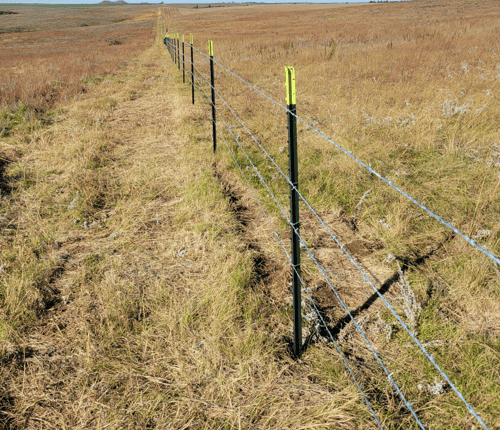
South Dakota Game, Fish and Parks (GFP) continues to make significant progress in improving wildlife movement across western South Dakota through its wildlife‑friendly fencing program. Since 2019, GFP and cooperating landowners have improved connectivity across approximately 200,000 acres of pronghorn habitat. Notably, 2025 marked the program’s most productive year yet, with more than 66,000 acres positively impacted through the replacement of 86 miles of fence. This exceeded any previous year and clearly reflects rising landowner engagement with GFP’s Private Lands Habitat Biologists and partners.
This work is crucial in a region where many rangelands were historically fenced with woven‑wire structures built for domestic sheep operations. While these fences often no longer serve their original purpose, they continue to present significant challenges for wildlife. Pronghorn, in particular, instinctively crawl under fences rather than jump over them. Woven‑wire fencing blocks this behavior entirely, forcing animals to follow fence lines for long distances or attempt difficult crossings. These barriers can disrupt movement and contribute to avoidable stress and mortality, especially during severe winter weather and blizzard conditions.
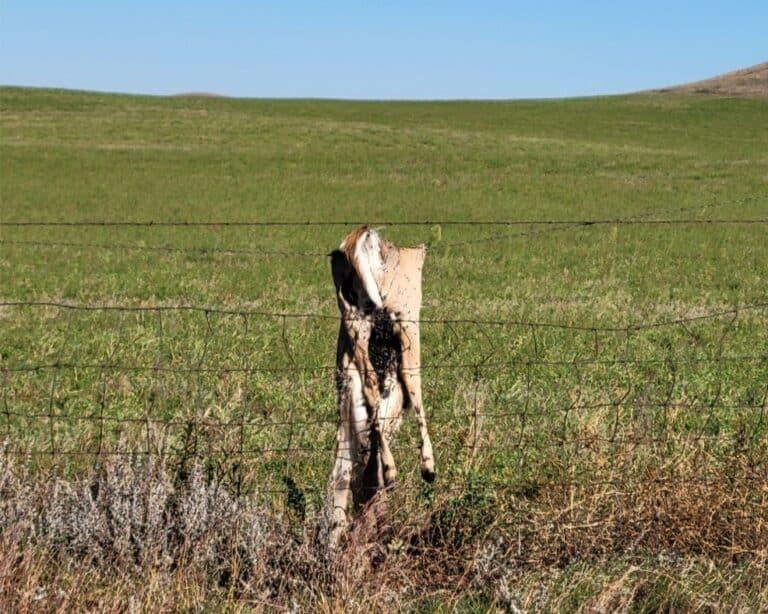
Mule deer caught in a woven wire fence. Courtesy of SDGFP.
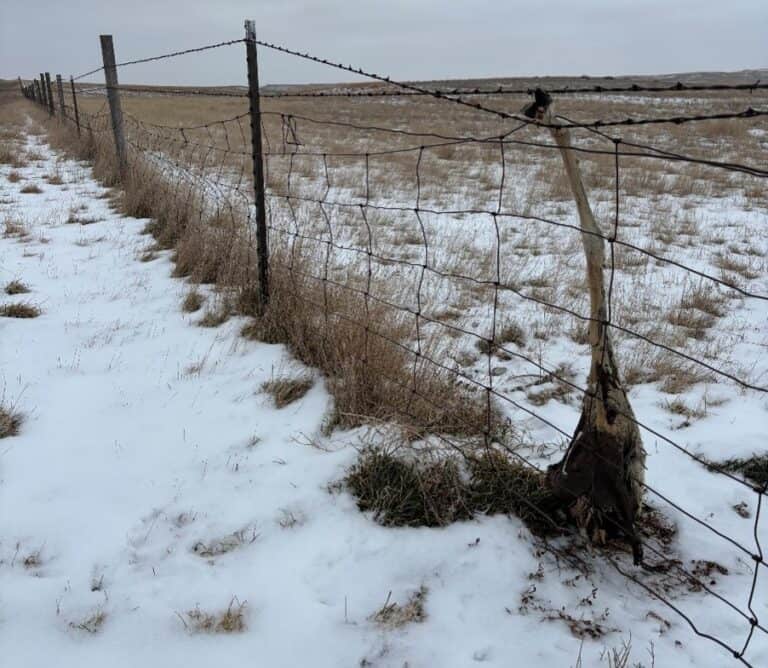
To address this problem, GFP collaborates with landowners to remove outdated woven‑wire fencing and replace it with wildlife‑friendly designs that support both livestock and wildlife. The updated fencing typically uses a three- or four-strand wire design with a smooth bottom wire set high enough for pronghorn passage, while the top wires remain low enough for mule deer to cross. These designs reduce entanglement risks, restore access to seasonal forage, and re‑establish natural movement corridors across the landscape. GFP has also received several comments from landowners who reported seeing pronghorn in pastures within days or weeks of project completion, even in areas where they had not seen pronghorn for many years. These quick responses underscore how effective even a single upgraded fence can be in reconnecting habitat and improving access to new forage opportunities.
GFP covers approximately 50% of project costs to support these upgrades, with landowners covering the remaining expenses. When landowners choose to remove woven‑wire fencing entirely without installing a replacement, GFP also offers a 50% cost‑share for the removal.
These flexible options make participation straightforward and practical for ranchers, many of whom use the opportunity to update aging infrastructure while directly contributing to habitat conservation. The substantial increase in acreage improved during 2025 reflects both the effectiveness of this approach and the strong partnerships driving the program forward.
With nearly 200,000 acres enhanced since 2019, the cumulative impact of wildlife‑friendly fencing is becoming increasingly visible. Pronghorn and other species now move more freely, additional habitat and forage are more accessible, and long‑standing movement barriers are steadily being removed. This work strengthens both wildlife populations and the resilience of working rangelands across the Northern Great Plains.
As GFP looks ahead, the momentum of 2025 sets the stage for continued work with landowners to remove these barriers on the landscape. By prioritizing key movement corridors and aging woven‑wire segments, the program will keep improving the ecological function of western South Dakota one fenceline at a time.
Learn more about South Dakota Game, Fish & Parks’ landowner and habitat programs and efforts to connect farmers and ranchers to habitat resources through Habitat Pays.